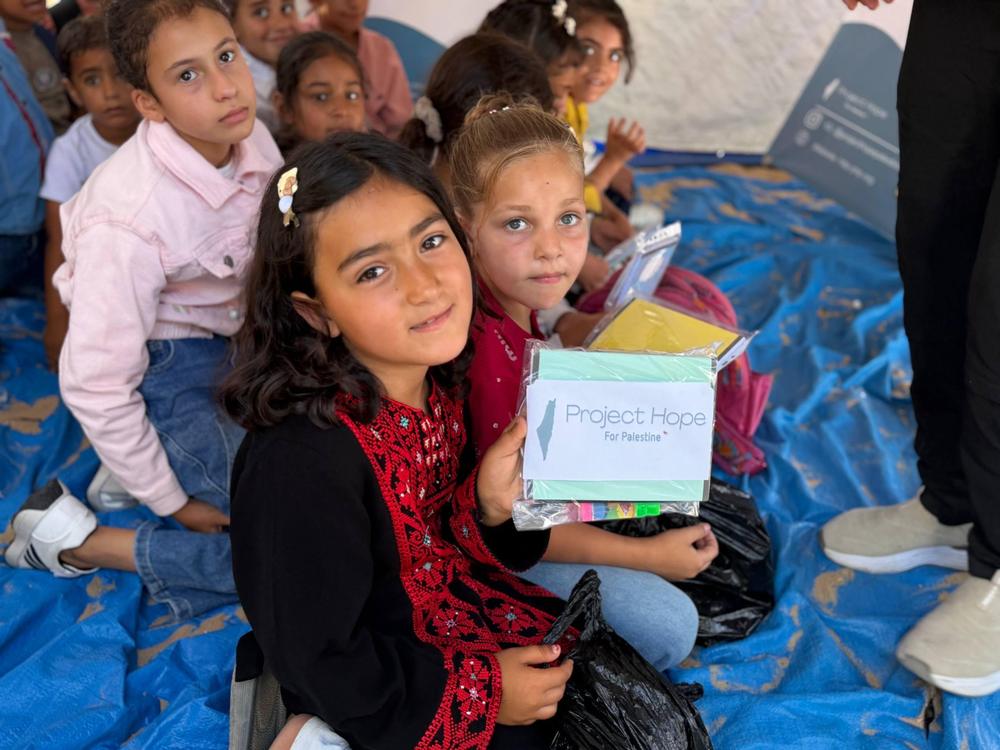
When the building is gone, the school is whatever you can put back together. In practice that is a frame, a cover, something to sit on, a board at the front, and a teacher willing to stand in front of it. The children arrive regardless; the question is only whether there is anything for them to arrive at.
We rehabilitate the spaces and equip them. A tent classroom is not a compromise anybody wanted, but a class that meets every morning is the difference between a year lost and a year interrupted.
A bag for every child
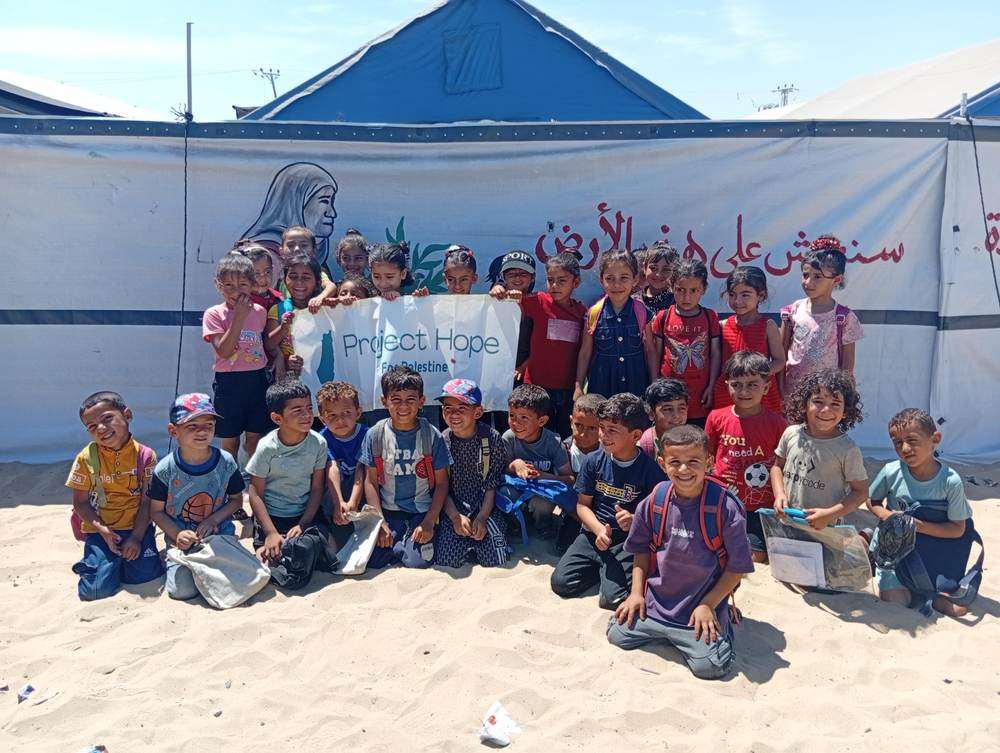
Each child on the register gets a bag with the basics in it — notebooks, pens, the things a lesson assumes you already have. Families who have moved several times do not have them, and a child without a pen stops putting their hand up long before they stop coming.
The teachers are from the same displaced communities. Paying them is part of the program: a school that depends on unpaid work is a school that closes the first week somebody cannot afford to keep coming.
We work on the schools alongside the orphans program, because the children with the least support at home are the ones whose attendance slips first.